20 Pro Suggestions For Deciding On Termite Control Services In Jakarta
Wiki Article
Jakarta Homes: Subterranean Termite Defense
Walk through any Jakarta neighborhood--Menteng, Kebayoran Baru, Kelapa Gading--and you will see them: door frames swollen at the base, fine brown lines climbing foundation walls, tiny pinprick holes in skirting boards. Most homeowners mistakenly believe that this is a sign of wear and tear. It is not. This is proof that a subterranean colony of termites has already occupied the structure and are eating 24/7 all week. The constant humidity in Jakarta and the unintentional enticement from modern construction methods are the major factors. It is important to disregard the recommendations of pest control guides and implement strategies specifically tailored to Jakarta's particular species soil, climate, and soil.
1. The door and window frame are a major cause of infection
Jakarta termites don't burst through slabs of concrete. They appear at the point that the wood meets the masonry, which is typically within the human reach. About half of all reported termite-related attacks are found in door jambs, windowsills, and wooden frames embedded within brick walls. Companies that employ drills or injection rods to penetrate the slab of floor, are fighting the wrong fight. The real battleground is at the waist. Moisture condenses on the glass and seeps onto the untreated wood.
2. Four Species, One City, Different Rules
Jakarta has at least four distinct subterranean termite species and they don't behave in a similar way. Coptotermes is the most aggressive structural invader. Microtermes insperatus, though more dominant numerically, is much less destructive. Macrotermes gilvus builds visible mounds in gardens. Coptotermes Gilvus favors trees that are alive, however, they will invade homes once they have run out of wood. The right bait can't be selected by pest control professionals who are unable to differentiate between them.
3. The Six-Week Truth
The elimination of colonies is not a legitimate process that happens overnight. Chlorfluazuron can take 6-8 weeks to circulate around the colony via trophallaxis (the sharing of food between termites). Pest control companies that promise twenty-four-hour elimination are selling poisons that kill the foragers however leave the reproductive nucleus underground untouched.
4. Above-Ground stations transform everything
A perimeter station is helpful for monitoring but useless to stop an infestation that already took place within the structure. Above-ground bait stations - small cartridges of bait directly bonded to mud tubes - force toxicant into the colony's active road. Jakarta exterminators who do not operate above-ground stations are selling inspection, not treatment.
5. The Soil Moisture Trap
The silty clayey soils of Jakarta hold water. Termites are attracted to conditions where soil moisture is above twenty-two per cent. Injecting chemical compounds into a habitat for termites without taking a look at the drainage, downspouts, or sprays for irrigation is a costly error.
6. Pine Stake Forensics
Professional Jakarta exterminators will bury untreated Pinus merkusii stakes on the perimeter before recommending treatment. They excavate them and weigh the stakes 30 days after. A weight loss of more than 30% means that foraging pressure is high and requires intervention. It's not just a guesswork, but an entomology calibrated that is accessible to any competent provider.
7. Green Belt Hazard
Nine Jakarta sub-districts carry extreme termite risk: Penjaringan, Pademangan, Palmerah, Kebayoran Baru, Jagakarsa, Pesanggrahan, Kramatjati, Duren Sawit, and Cipayung. These areas share one characteristic--significant remaining green space that sustains parent colonies. These zones require homes to be inspected quarterly and continuously lured. Annual contracts are not enough.
8. The Construction of the New Building is Not Safe
Termites adapt to urban development. They settle in the dirt that is imported to new housing developments, forage through utility trenches, and colonize the landscapes that are irrigated by developers. A newly constructed BSD home, also known as a Bekasi home isn't an unfinished piece of land. It was colonized by termites it just a few days after the first plantation of shrubs.
9. Short-Rotation teak isn't your grandpa's teak
Traditional Javanese teak, which is harvested at the age of 60, has silica and oils that are able to repel termites. Modern plantation-grown teak, harvested within 15 years doesn't. Many of the "teaks" employed in Jakarta's housing are chemically immature and botanically identical. If homeowners pay for termite-resistant timber, they often receive termite-resistant wood.
10. The Mud Tube Forensics Rule
Never scrape away a mud-tube without examining the contents. The tube's source point is the soil entry zone. Its diameter correlates with colony age. Your colony's location (bathrooms and kitchens, or even the exterior walls) may indicate the moisture source that is sustaining it. A tube that's been removed without reading it is like deleting video surveillance without watching it.
Conclusion
Jakarta homes aren't in danger of invasion. The homes are occupied by inhabitants who have adapted to the specific requirements of the city. The species is known. The patterns of attack are recorded. The timelines of treatment are assessed. There is only one thing to consider: whether homeowners, and the antitermite services that they employ, will break with the myths surrounding pest control and implement procedures that are validated by Jakarta's underground termites. There is scientific evidence. The question is how to utilize it. View the best jasa basmi rayap for site examples including rayap adalah, jasa rayap, jasa basmi rayap, rayap pekerja, anti rayap terbaik, jasa pengendalian hama, jasa pengendalian hama, jasa anti rayap bandung, cara membasmi rayap di lemari, jasa pembasmi rayap and more.

The Greater Jakarta Area Soil Treatment Protocols
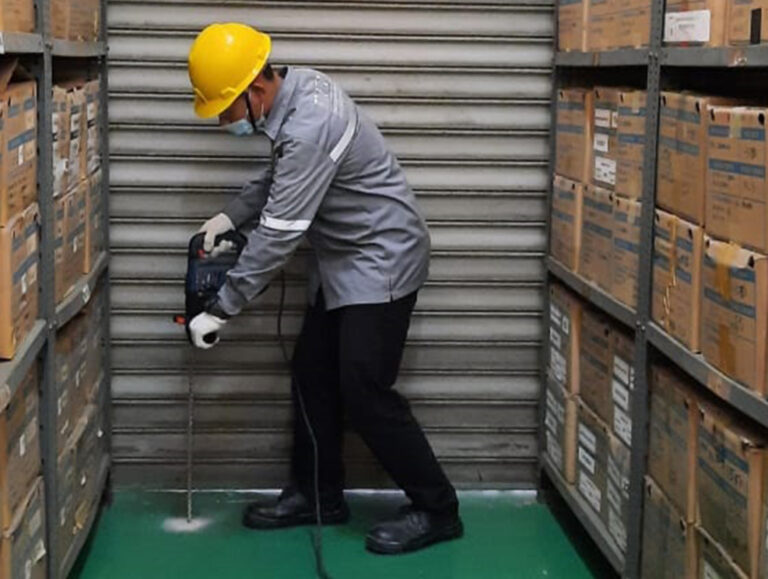
The trench is dug. Place the rod. The chemicals are then injectable. The technician repeats the process every sixty centimeters. Both exterminators and homeowners take this practice seriously, as it is repeated thousands of times a year throughout Greater Jakarta, as a proven technology. It's not. It's just a standard method. Subterranean soil treatment for control of pests originated in temperate climes with soils with various textures, water regimes, or species. Trench-and-drench when applied to Jakarta's silty, compacted clay and Coptotermesgestroi behavior of foraging, results that range from temporary suppression to total ineffectiveness. Greater Jakarta needs soil treatments that are specifically designed specifically to Greater Jakarta conditions. Ten points separate chemical treatment, which only creates invoices from treatment that is free of termites.
1. The soil texture determines chemical Mobility
Jakarta's urban land is predominantly composed of clay silty. The particles are very tiny. Organic content is very low. Porosity is not too high. Liquid termiticides formulated for the substrate don't disperse radially like they do in loamy sands; they pool within the trench, and then move through preferred pathways, cracks, utility trenches, roots channels. Pesticides who think they have a uniform distribution are deceiving themselves. There is no need for faith soil core sampling after application.
2. The 300-500mm Moisture Belt determines the location
Roof eaves protect the soil that is adjacent to the wall of foundation. Rainfall is minimal. It is dryer than soil used for gardening. Termite hunting activity is concentrated in the belt 300 to 500 millimeters from the structure, close enough to the foundation but sufficient to allow water. Treatment of soil applied flush to the wall does not reach the belt. The drip line is the line where the trench should be put in.
3. The Half-Life of Hydrolysis can be measured in weeks instead of months.
Hydrolysis breaks down fipronil imidacloprid, and bifenthrin. The rate at which hydrolysis occurs grows with temperature and humidity. Jakarta's average soil temperature is 28-32degC. The soil's moisture is higher than 20% during the majority of the season of wetness. In this case, the half-life of chemical products will be reduced. Bekasi has an effective field duration of around 4 months in a product that is labeled as having ten-month effectiveness. Warranty documents must reflect this. Most do not.
4. Vertical Barriers require horizontal disruption
Termites enter through the soil-foundation interface. The soil treatment will create a vertical wall of chemical in the event that it is applied at the intersection. If the rod is injected from the top it will release the chemical in depth. But, the top 5-10 centimeters of the column are untreated. The topsoil cannot be protected by exterminators who use rods which are pushed to depths and pulled immediately.
5. C-Organic Compounds Bind and Deactivate
Organic matter found in soil adsorbs termiticides which are not repellent, thereby reducing the quantity of termiticides that are that are available to termites. The Jakarta city soils are a little deficient in organic carbon. But the landscape planters close to foundations are able to absorb plenty of compost and potting mix. To treat soils, higher rates are needed for the breakdown of organic binding agents in these zones. The label standard assumes that the soil is unaltered. mineral soil.
6. Pre-treatment Moisture Audits Are Non-Negotiable
A soil water content of more than 22% creates preferential habitat. The levels of water in soil lower than 10% are harmful to foraging, and also decrease chemical uptake. The exterminator who does not test the soil's moisture prior to injecting terminicide is putting chemicals under unknowing conditions. The cost of the moisture meter is 200 thousand rupiah. The first re-treatment for inadequate conditions for application is more than ten times.
7. Trench Volume Must Match Label Rate, Not Linear Meter
Indonesian soil treatment quotations are usually priced per linear meter of foundation. Label instructions indicate the volume and concentration per units of area or linear meters for specific trench dimensions. The quotes that are provided per meter but do not check the width or depth of the trench compliance documents and not treatments. The quantity of chemical needed for trenches measuring 15cmx15cm is less than half of the chemicals needed for 30cmx30cm trenches. It is not often that the price difference reflects this.
8. Trenching Versus Rodding: Specific Choice
Coptotermes Gstroi feeds on soil for the first 15-20cm. Microtermes insperatus forages deeper, and accessing moisture during dry periods through vertical shafts. Rod injection deposits chemical at depth, intercepting Microtermes. Trenching, mixing and distributing chemical over the entire upper surface intercepts Coptotermes. Species identification must precede protocol selection. Exterminators that use the same soil treatment technique for every account are mismatched to Jakarta's diversity of species half the time.
9. Re-treatment Intervals Are Shorter Than Marketing Claims
The market for pest control in Indonesia has a high level of competition. Warranty periods have inflated as a sales tactic. Three-year guarantees on soil treatments are typical. The soil conditions in Jakarta permit a twelve to eighteen-month period of exclusion. Then comes an increasing depletion of chemicals as well as edge penetration. Homeowners who see termites at month twenty-two do not represent an anomaly. They are in line with the schedule. Pest control companies that honor warranty claims in month twenty-two, and without arguing about the coverage, keep their customers. Exterminators with a dispute will lose their clients.
10. Post-treatment soil samples are the Only Verifiable Quality Control
The exterminator says that the chemical mix was right The injection pressure was correct, and the distribution was uniform. The homeowner does not have any way to verify. Verification is done by analysing soil cores for active ingredients. This service is available. The service is accessible. Jakarta antitermite services which commission soil sampling from third parties and then share the results with clients distinguish themselves on the basis of their evidence. Services that do not sample are differentiated by faith. Markets prefer more evidence.
Conclusion
The soil treatment protocols employed in Greater Jakarta are not maintained since they are appropriate for Greater Jakarta, but because they have become accustomed. However, familiarity doesn't mean that they are effective. In the silty, compacted soils of the city, larger trench volumes are required to achieve an equivalent chemical distribution. The monsoon-influenced climate in the city stretches hydrolysis times which means shorter warranty durations and more frequent retreatment cycles. The species assemblage of the area needs to be differentiated in accordance with pre-treatment identification. Its landscape planting beds require organic carbon adjustment and increased application rates. The geometries of the foundation of the company require trenches to be laid at the dripline, not on the wall. Jakarta anti-termite treatment services that are performing soil treatments in accordance with the labels of the manufacturer that are written for Ohio, Texas, or Osaka are ensuring suboptimal results. The manufacturers are not accountable for the outcome and the exterminator's responsibility is. Adaptation is dependent on investment in soil moisture meters, the connections with analytical laboratories, and instruction for technicians on species identification. These investments are not unaffordable in an established market. These investments are required to be a valid entry. Homeowners from Greater Jakarta know the difference between exterminators who have this entry charge and those who do not. They can prove this by denying lower prices from those who have and settling for higher offers from exterminators who have paid the entry fee. Take a look at the most popular anti rayap for website advice including jasa basmi rayap, jasa anti rayap tangerang, rumah rayap, penyebab rayap, rayap adalah, jasa anti rayap jakarta, cara membasmi rayap di lemari, cara membasmi rayap, rayap adalah, jasa anti rayap surabaya and more.